Optimise Your Student’s Experience with a Student Journey Map
Published by Sen Nguyen8 min read

In This Article
- 1. Let’s explore what student journey mapping involves, why it matters and how your RTO can put it into practice.
- 1.1. What Is Student Journey Mapping?
- 1.2. How Can Student Journey Mapping Improve Student Experience and Increase Enrolments?
- 1.3. What Are the Key Elements of a Student Journey Map?
- 1.4. How Do You Put Students at the Centre of the Journey Map?
- 1.5. How Can Technology Support the Student Journey?
- 2. Final Thoughts
A student journey map helps RTOs visualise this entire experience, identify potential problems and understand what students need at different stages. With insights from a well-developed journey map, a student management system RTO teams use can become part of a broader approach to creating more organised and student-focused experiences.
Let’s explore what student journey mapping involves, why it matters and how your RTO can put it into practice.
What Is Student Journey Mapping?
Simply put, a student journey map outlines the complete sequence of interactions between students and an RTO. It begins when someone first becomes aware of your institution and continues through enquiries, applications, enrolment, training and the relationship they maintain with your organisation after graduation.
The purpose of journey mapping is to understand the experience from the student’s perspective rather than looking at each interaction as an isolated administrative task.
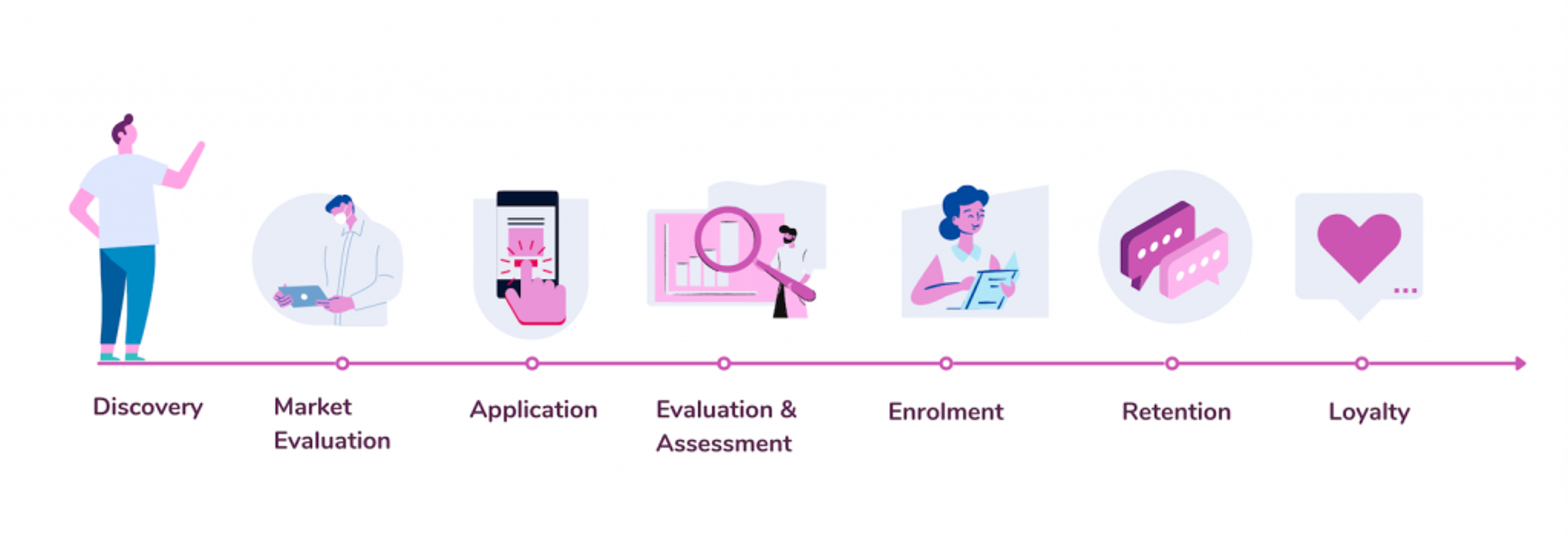
As students move through their training journey, their expectations, motivations and feelings can change. A journey map helps RTOs identify these changes and understand what students may need at different stages.
It also provides an opportunity to identify potential pain points, such as complicated application processes, unclear communication, difficulties accessing information or a lack of support during training.
When developed effectively, a student journey map gives RTOs a clearer picture of the interactions that shape the student experience and highlights where improvements can make a meaningful difference.
How Can Student Journey Mapping Improve Student Experience and Increase Enrolments?
Understanding students’ experiences can help RTOs make more informed decisions about their processes, communication and training offerings.
A student journey map allows your team to visualise the different stages of the experience and identify where students may encounter difficulties.
For example, a complicated enquiry process might discourage prospective students from applying. Similarly, unclear enrolment instructions or insufficient communication during training could leave existing students feeling frustrated or unsupported.
By identifying these issues, RTOs can take practical steps to improve the experience.
Journey mapping can help your organisation:
- Identify what attracts prospective students to your institution.
- Understand why some enquiries do not progress to enrolment.
- Recognise where students experience difficulties during the application process.
- Identify students who may need additional guidance or support.
- Improve communication across different stages of the training journey.
- Understand what encourages students to remain connected with your institution after graduation.
These insights can also help RTOs identify opportunities to improve their existing curriculum and training processes.
Ultimately, a better understanding of the student experience can help reduce dissatisfaction, improve enrolment experiences and encourage stronger relationships with your institution.
What Are the Key Elements of a Student Journey Map?
Every RTO can create a student journey map in a format that suits its requirements. However, a detailed map generally includes five important elements.
1. Student Personas
Personas are fictional representations of the different types of students your RTO serves. They can include details such as age, background, interests, expectations, motivations and potential challenges.
Developing student personas helps your team understand that different students may have different needs and expectations.
For example, someone entering vocational education for the first time may require more guidance during enrolment, while an experienced professional undertaking additional training may prioritise flexibility and straightforward access to information.
2. Student Path
The student path outlines the typical steps someone takes when interacting with your RTO.
This might include:
- Discovering your institution.
- Visiting your website or social media pages.
- Making an enquiry.
- Submitting an application.
- Completing the enrolment process.
- Beginning and progressing through training.
- Completing their course.
- Maintaining contact with your institution after graduation.
Mapping these stages helps your team understand the full experience and identify where improvements may be needed.
3. Students’ Emotions
Understanding how students feel throughout their journey is just as important as identifying the interactions themselves.
Consider what a prospective student might experience when trying to understand your course options or how an existing student might feel when they encounter difficulties accessing training materials.
This information can be gathered through formal or informal interviews, surveys and feedback forms.
Recording students’ expectations, concerns and experiences at different stages helps your RTO identify areas that may require additional attention.
4. Touchpoints
Touchpoints refer to every interaction between students and your RTO.
These can include:
- Application forms on your website.
- Messages exchanged through social media.
- Phone calls and email communication.
- Enrolment instructions.
- Training materials and course resources.
- Face-to-face interactions with trainers and administrative staff.
- Feedback forms and post-training communication.
Listing these interactions helps your team understand how students experience your institution across different channels.
5. Gaps and Opportunities
Once you have identified student personas, paths, emotions and touchpoints, the next step is to look for gaps and opportunities.
Are there stages where students are receiving insufficient information? Are there unnecessary steps in the enrolment process? Are students finding it difficult to contact the right person when they need assistance?
Identifying these gaps allows your RTO to prioritise improvements and make changes that address actual student needs.
How Do You Put Students at the Centre of the Journey Map?
Every effective student journey map should begin with the students themselves.
Rather than making assumptions about what students experience, RTOs should gather information directly from the people who interact with their institution.
Here are a few practical ways to get started:
Talk to Your Current Students
Discuss the enrolment process, training experience and communication they have received from your institution. Ask what worked well, what could have been better and whether they encountered any difficulties.
Collect Feedback from Past Students
Students who have completed their courses can offer valuable insights into the entire training journey. Their feedback can help you identify areas that may have been overlooked during the training process.
Use Surveys and Feedback Forms
Short surveys can help you gather information about students’ expectations, satisfaction levels and experiences at different stages. Consider collecting feedback at multiple points rather than waiting until course completion.
Review Your Website Analytics
Your website can provide useful information about how prospective students interact with your institution. Reviewing page visits, enquiry forms and other digital interactions may help identify where potential students lose interest or leave the application process.
The more information you gather, the better equipped your team will be to understand the student experience and identify opportunities for improvement.
How Can Technology Support the Student Journey?
Understanding the student journey is only the first step. RTOs also need suitable systems and processes to support the experiences they want to create.
A LMS for RTOs can help organise and deliver training materials, while RTO management software can support the broader administrative processes involved in running a training organisation.
Choosing the right RTO software can also help teams manage information more efficiently and reduce unnecessary administrative effort. Other RTO tools can support specific operational activities, allowing staff to spend more time addressing student needs.
However, technology alone cannot guarantee a positive student experience. It needs to be supported by clear communication, accessible information and a genuine understanding of what students require at every stage.

What is a student journey map?
A student journey map is a visual representation of the interactions a student has with an RTO, from their first contact with the institution through enrolment, training and post-graduation engagement. It helps organisations understand student experiences and identify opportunities for improvement.
Why is student journey mapping important for RTOs?
Student journey mapping helps RTOs understand student expectations, identify pain points and improve interactions across different stages of the training experience. It can also highlight opportunities to improve enrolment processes and student satisfaction.
What should a student journey map include?
A detailed student journey map generally includes five elements: student personas, the student path, students’ emotions, touchpoints, and gaps and opportunities. Together, these elements provide a clearer picture of the complete student experience.
How can RTOs collect information for student journey mapping?
RTOs can gather information through student interviews, surveys, feedback forms, discussions with past students and website analytics. Using several sources helps build a more complete understanding of student expectations and experiences.
Can student journey mapping help increase enrolments?
Yes. By identifying problems in the enquiry and application processes, RTOs can make it easier for prospective students to understand their options and complete enrolment. Improving these interactions may help reduce the number of potential students who leave before signing up.
How does technology support the student experience?
Technology can help RTOs organise training resources, manage administrative processes and make information more accessible. However, systems should support a broader student-focused approach rather than replace meaningful communication and support.
Final Thoughts
Student journey mapping is a valuable way for RTOs to understand how students experience their institution, from their first interaction to the relationships they maintain after graduation.
By identifying student personas, mapping their paths, understanding their emotions and reviewing key touchpoints, RTOs can uncover problems that might otherwise go unnoticed.
The real value of journey mapping lies in the conversations, feedback and insights it generates. When these findings are used to make practical improvements, RTOs can create more positive experiences, strengthen student relationships and support future enrolments.
A well-chosen student management system RTO teams can work with may support some of these processes, but creating a better student experience ultimately starts with listening to students and understanding their needs.
Related Topics
Start Your Free Trial Today!