Spotlight on Digital Transformation for Industry 4.0: Automated VET Mapping for RTOs
Published by M.Cross 6 min read

In This Article
COVID-19 has taught us that having a technology-based plan goes a long way in preparing for the unexpected. During lockdown, many businesses and organisations were forced to adapt to a new style of working and communicating, with hardly any warning.
Nearly overnight, governments worldwide issued new rules restricting large gatherings and in-person commercial activities, and encouraged people to work from home if possible. Because of this, companies and employees began looking for methods to continue their activities remotely.
Today, technology is not only enhancing people’s lives, but it’s also making work easier and more accessible for everyone. ‘Digital transformation’ is no longer simply an option for businesses; it’s necessary to survive and prosper as technology advances and ushers in a new decade of the ‘Internet of Things’ (IoT).
For Australian RTOs, this transformation also presents an opportunity to move towards automated VET mapping, replacing time-consuming manual processes with more practical digital solutions.
What is digital transformation?

Digital transformation is the process of leveraging digital technology to build new – or modify existing – company processes, culture, and customer experiences to meet changing business and market requirements.
However, digital transformation entails more than simply digitising an existing working process; it’s also about transforming that process into something more practical and manageable.
In a nutshell, digital transformation implies a new way of thinking. It boils down to innovative ideas, reshaping systems, processes, and corporate culture. Most importantly, digital transformation values the significance of the interaction between organisations, employees, and their customers.
Why is digital transformation necessary?

Advanced digital equipment and workflow facilitate mobility and remote communication, which decentralises manufacturing and makes it possible for employees to connect from anywhere across the globe. Team leaders and all members can now request, deliver and track tasks without the need of being in the same physical place.
In addition, digital transformation helps companies combine external and internal information and resources into a set of business systems. Not only does it centralise all business materials in one place, but it also makes them available to all team members. As a result, employees who have access to the necessary information can work more efficiently and feel less stressed.
Nevertheless, customers who experienced numerous lockdowns are more inclined to request contactless services. Thus, automation and online services now hold tremendous potential for businesses, assisting in managing anything from inventories to email subscriber lists. The fewer procedures workers must handle, the easier it is for companies to provide products, good services, and safe customer experiences.
The challenges of digital transformation

One of the most significant challenges in implementing a new digital transformation strategy is associated with organisational culture. Most of the time, it’s easy to assume that digital transformation will occur as soon as the company’s tools and technology are upgraded.
However, digital transformation entails far more than merely utilising cutting-edge technology and equipment. It’s also about the company’s and its workers’ capacity to adapt to these changes. Even if a company has a solid digital transformation plan, managing organisational-wide change might be one of the most prominent issues.
Failing to communicate the importance of digital transformation and choosing the appropriate strategy to implement it might lead to resistance amongst employees. As a result, employees may be resistant to change unless they understand how it will affect their work-life.
Time to digitalise your mapping process
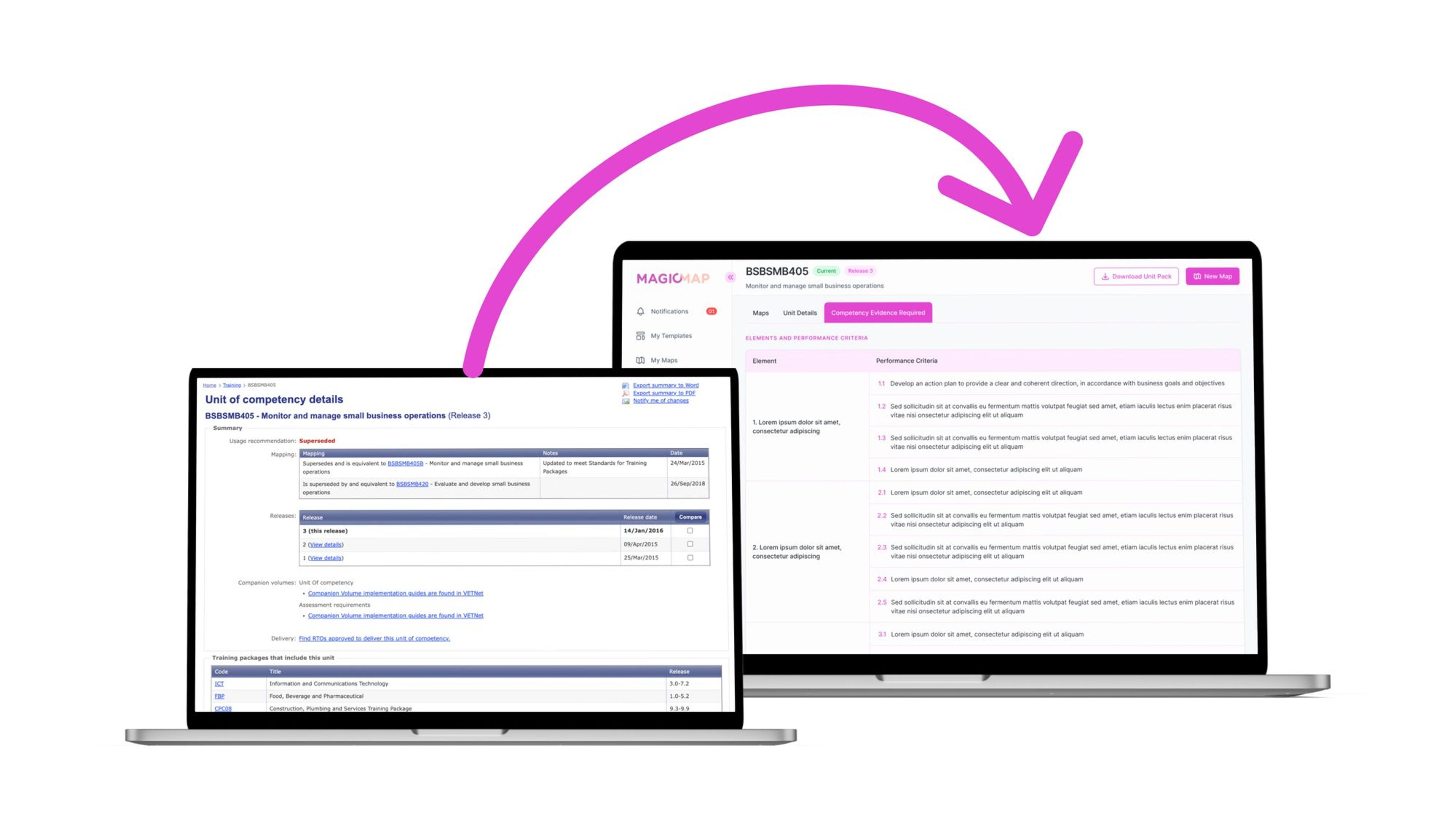
In the past, RTOs have done their mapping using old-fashioned spreadsheets. All performance criteria, including essential unit information, element titles, critical aspects, and performance evidence, required tedious hours of copy-and-pasting from training.gov.au.
These manual VET mapping problems can make it difficult for teams to keep their mapping information organised and up to date.
Not with Magic Map.
Magic Map is designed for the modern era of vocational training. With a single click, you’ll generate a list of unit criteria in seconds, no copy-and-pasting required! You’ll be notified once training.gov.au issues an update and can easily choose how to apply these changes to your maps.
This is where smart mapping software can make a difference. Rather than manually searching for and transferring unit information, RTOs can use digital tools to simplify the process and reduce RTO mapping time.
Magic Map allows you to focus on the real work, manage your maps, collaborate with your team and store all templates in one online secure storage.
Its approach to training package update mapping also makes it easier to respond when information on training.gov.au changes, giving your team more control over how those updates are reflected in existing maps.
What is digital transformation?
Digital transformation involves using digital technology to create new or improve existing business processes, systems, workplace culture and customer experiences. It goes beyond simply moving existing processes online.
Why is digital transformation important for businesses?
It can help businesses improve communication, centralise information, support remote working, streamline workflows and make services more accessible to employees and customers.
What are the biggest challenges of digital transformation?
Some of the biggest challenges involve organisational culture, employee resistance to change and a lack of communication. Successful transformation requires people and processes to adapt alongside technology.
How can RTOs benefit from digital transformation?
RTOs can use digital platforms to simplify administrative processes, organise training information, support team collaboration and reduce time spent on repetitive manual tasks.
How does Magic Map support digital transformation for RTOs?
Magic Map helps RTOs digitalise their VET mapping process. It generates unit criteria using information from training.gov.au, notifies users when training package information changes and provides tools to manage maps and collaborate with team members.
Can digital mapping replace manual VET mapping spreadsheets?
Digital mapping platforms can provide an alternative to manually creating and maintaining mapping spreadsheets. They can help RTOs organise unit information, reduce repetitive copy-and-paste work and manage updates more efficiently.
Final Thoughts
Overall, digital transformation is more than just a technological endeavour. Note that investing in emerging digital technologies does not guarantee a successful digital transformation.
For many organisations, knowing their people are more essential than implementing technology. At the end of the day, people, procedures, and technology must go hand-in-hand in order to build the foundation of any transformation.
For RTOs, automated VET mapping is one practical way to put digital transformation into action. By moving away from manual spreadsheets and adopting more efficient mapping processes, teams can spend less time on repetitive tasks and more time focusing on their work.
Related Topics
Start Your Free Trial Today!