A Practical Guide to Unit of Competency Mapping in Four Steps
Published by Sen Nguyen6 min read

In This Article
- 1. Four steps to follow:
- 1.1. Step One: List the unit criteria
- 1.2. Step Two: Link the Knowledge Evidence to the Performance Criteria
- 1.3. Step Three: Map the Foundations Skills to the Performance Criteria
- 1.4. Step Four: Link the Performance Evidence to the Performance Criteria
- 2. The Outcome: A More Complete Mapping Document
The system of training packages, as well as units of competency, has been a staple of Australia’s Vocational Education and Training (VET) sector for nearly forty years.
So that means everyone understands all the ins, outs, ups, downs, outsides and arounds of these structures and standards, right?
Not so much. The system is constantly evolving, and it’s up to the VET industry to keep up.
You’re probably here because you understand how important it is to consistently develop your ability to read, use and reflect a unit of competency in the resources used to deliver, train, facilitate and assess its content.
Understanding the requirements of a unit is only the beginning. You also need to ensure that your training and assessment materials address the relevant requirements and provide sufficient evidence of competency. This is where effective unit of competency mapping becomes essential.
Right, so how do you map a unit of competency?
‘Unpacking’ a unit of competency is the VET industry’s way of demonstrating that you’ve understood its requirements. There are a few standard steps you can follow, along with some additional steps that are incredibly important but often overlooked.
Let’s walk through them.
Four steps to follow:
Step One: List the unit criteria
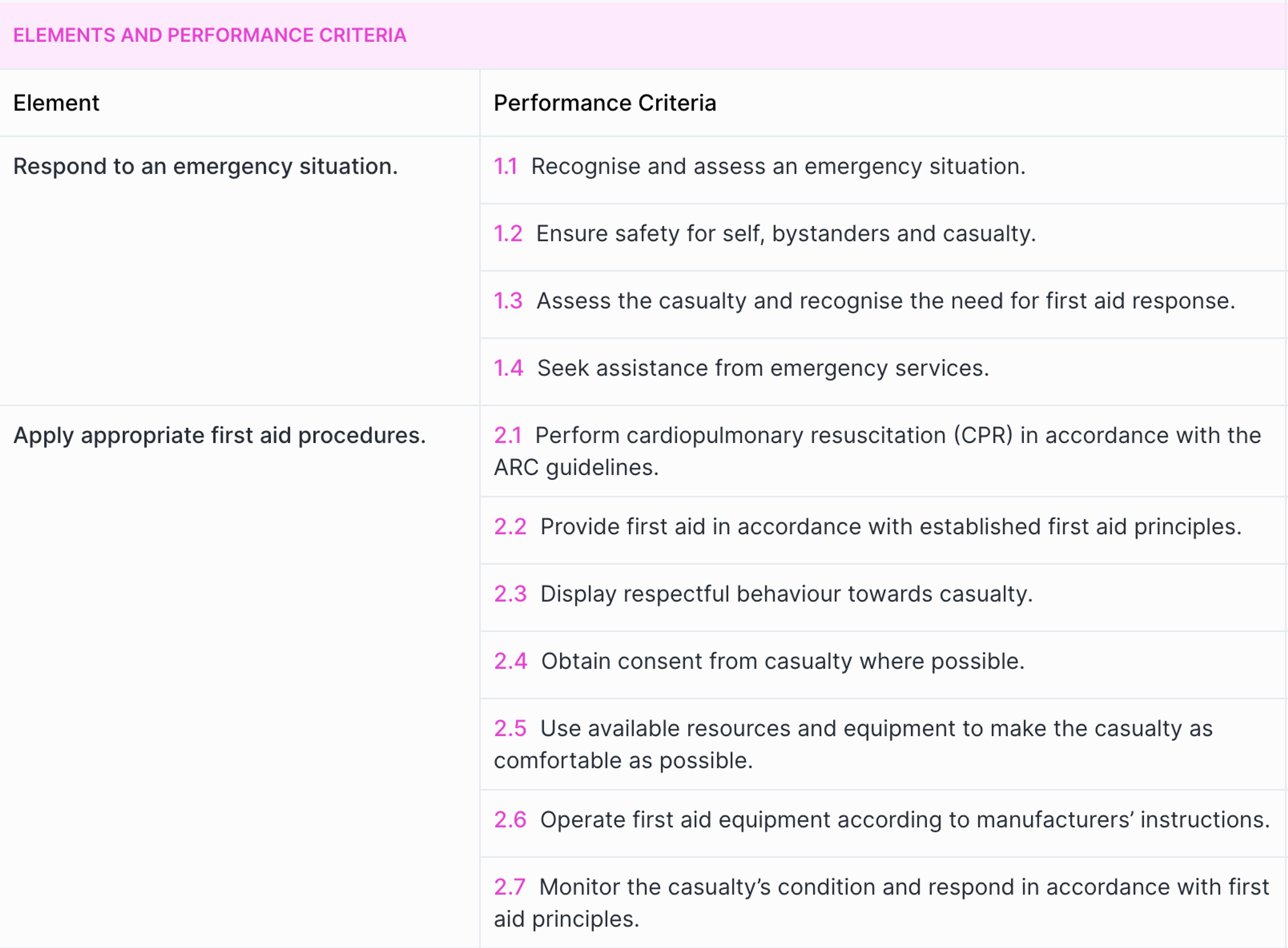
Traditionally, this has been done using a good old-fashioned spreadsheet. You create a table listing all the performance criteria, including the relevant unit information, element titles, critical aspects, performance evidence and knowledge evidence.
You then go on to list the assessment methods and tools that demonstrate evidence of these criteria.
Now, I know what you’re thinking.
That’s a heck of a lot of information for one document! You’re probably going to spend most of your day copying and pasting everything from training.gov.au.
Not with Magic Map.
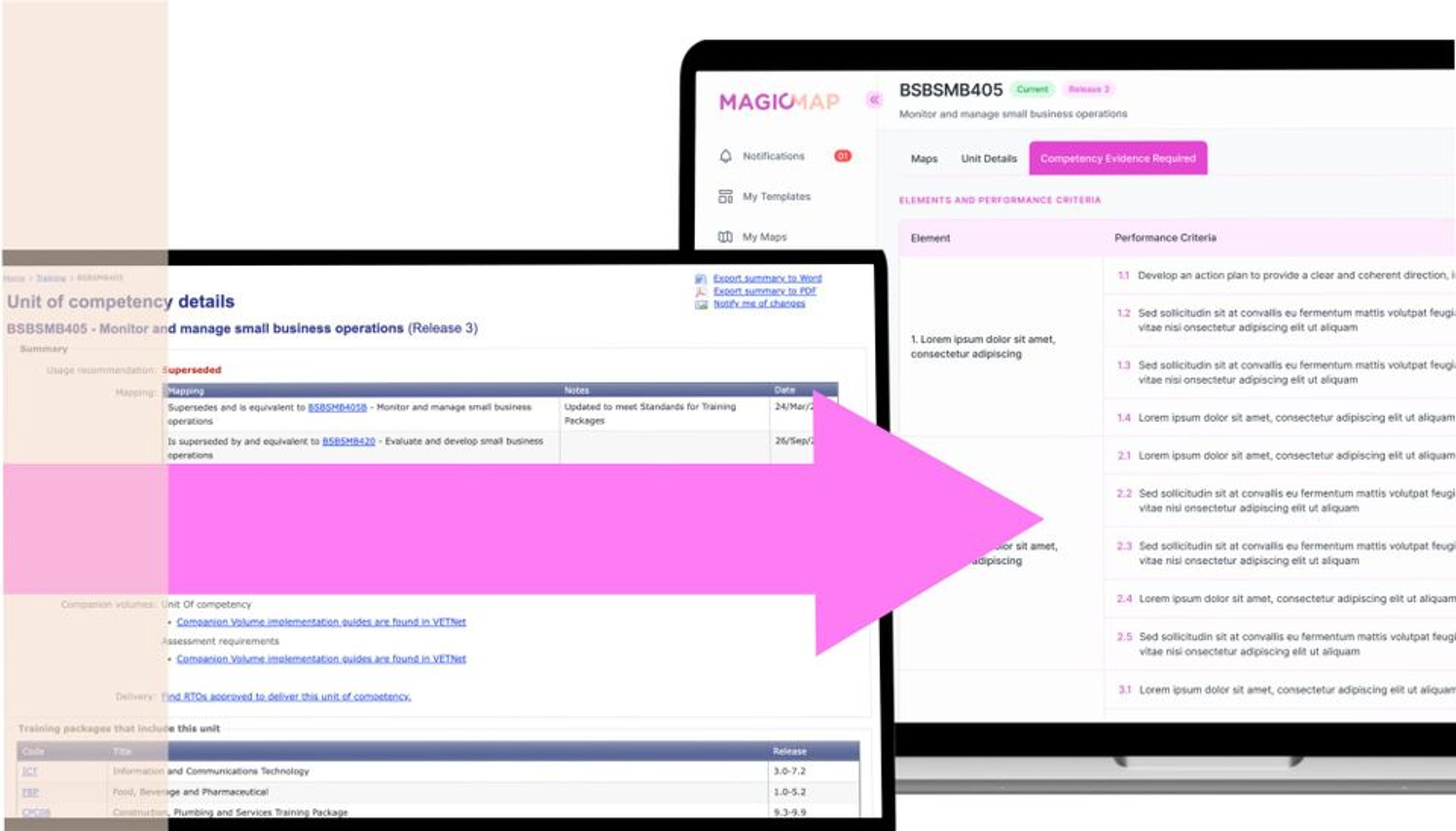
Magic Map syncs directly with training.gov.au.
With the click of a button, you can generate your list of unit criteria in seconds, with no copying and pasting required!
What would typically take twenty minutes or more can now be done with a single click, setting you up perfectly for the next step in the mapping process.
Step Two: Link the Knowledge Evidence to the Performance Criteria

This is an often-overlooked step when mapping, but an extremely valuable one.
Unpacking a unit and mapping it to assessments helps identify how the different elements of the unit work together to achieve an overall workplace outcome.
Performance criteria are only one part of the puzzle.
What knowledge does a student need to have in order to perform a particular task?
This is where knowledge evidence mapping becomes important.
You need to identify the knowledge a student must demonstrate to perform the required tasks competently and include it in your mapping document.
By connecting the knowledge evidence to the relevant performance criteria, you get a more complete picture of what the unit requires and what your assessment needs to address.
Step Three: Map the Foundations Skills to the Performance Criteria

Foundation skills (also referred to as required skills) are the skills a person needs to possess to perform a task competently.
These skills are an important part of understanding the requirements of a unit of competency and ensuring that students have the necessary capabilities to perform their tasks.
Luckily, Magic Map does this for you automatically!
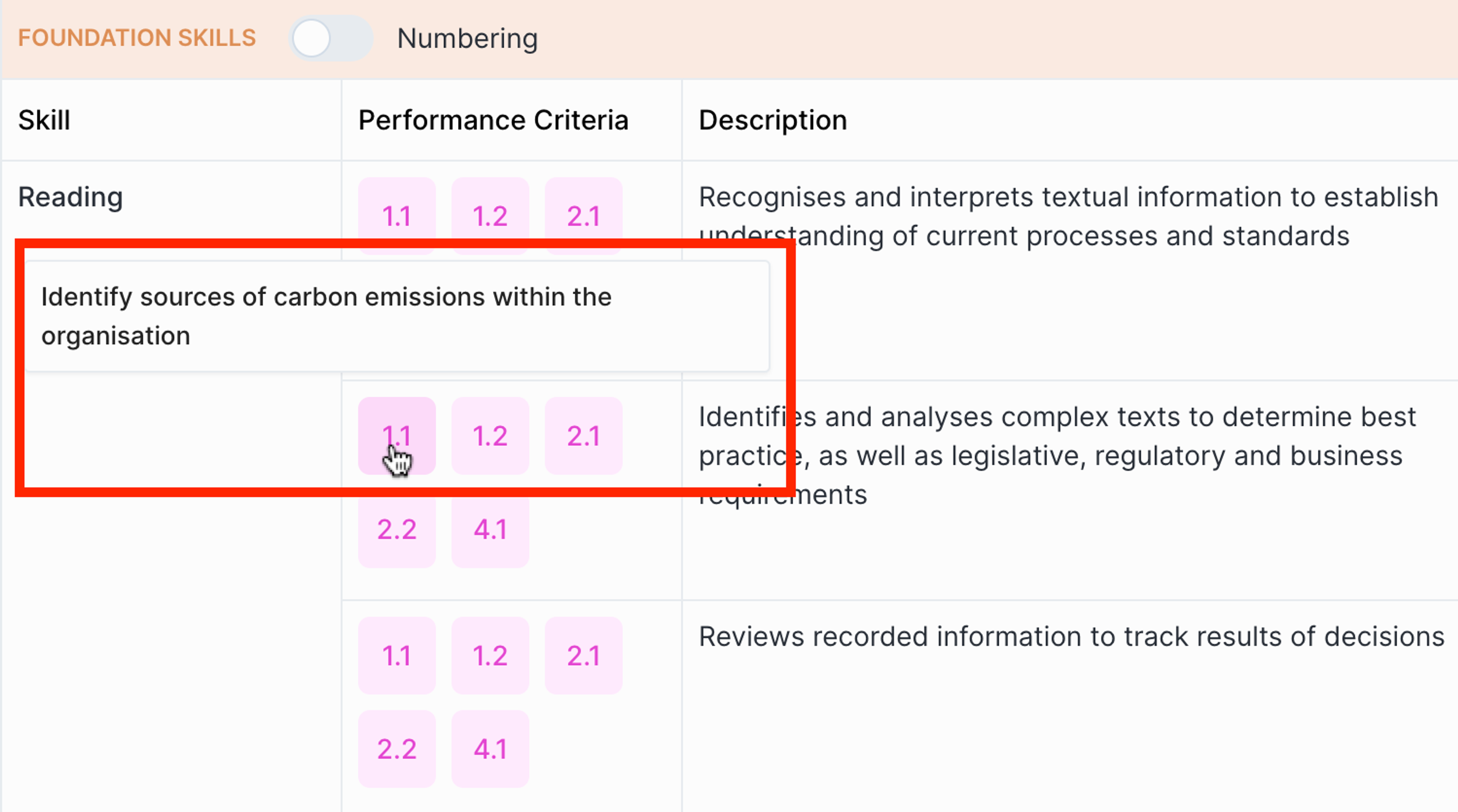
Additionally, Magic Map also maps the foundation skills to the performance criteria.
This means you don’t have to spend time manually identifying and linking these requirements. Magic Map helps organise the information, making it easier to see how the foundation skills relate to the performance criteria within your unit.
Step Four: Link the Performance Evidence to the Performance Criteria

You’ve followed the steps above, and now you have a good idea of the task that must be completed, the knowledge required to do so and the skills that a competent person needs to demonstrate.
This last step is about the actual evidence of performance.
Once you have your map, link the relevant references, assessment methods and tools to each performance criterion. This is an important part of performance evidence mapping, as it helps establish how students will demonstrate their ability to perform the required tasks.
From this point, your mapping document can also include how you’ve considered:
- The dimensions of competency.
- The conditions of assessment.
- The competency status of your trainers and assessors.
If you like, you can go a step further and identify the Australian Qualifications Framework (AQF) outcomes and characteristics that would be achieved through the unit.
This additional AQF mapping can help provide a broader picture of how the unit contributes to the qualification’s intended outcomes.
What is unit of competency mapping?
Unit of competency mapping is the process of identifying and linking the requirements of a unit of competency to the relevant training resources, assessment methods and evidence. It helps RTOs demonstrate that their training and assessment materials address the requirements of the unit.
Why is it important to map knowledge evidence and performance criteria?
Knowledge evidence explains what a student needs to know to perform a task, while performance criteria describe what they need to demonstrate. Linking the two helps ensure that assessments address both the theoretical knowledge and practical requirements of a unit.
What are foundation skills in a unit of competency?
Foundation skills are the essential skills a person needs to perform tasks effectively. Depending on the unit, these may include communication, learning, reading, writing, numeracy and digital skills.
How often should RTOs update their mapping documents?
RTOs should review their mapping documents whenever relevant training packages or unit requirements change. Regular reviews also help identify gaps between existing training and assessment materials and the current requirements.
Can Magic Map automate unit of competency mapping?
Magic Map simplifies several parts of the mapping process. It syncs directly with training.gov.au to generate unit criteria, automatically maps foundation skills to performance criteria and provides mapping templates that help RTOs organise their information.
The Outcome: A More Complete Mapping Document

By following these four steps, you’ll have a comprehensive mapping document that provides a clearer picture of your assessment strategy.
It will also help you conduct gap analysis of your assessments, particularly when using Magic Map’s traffic light feature.
Most importantly, your mapping document can provide valuable evidence to auditors of how your assessment approach is student-focused and avoids overloading students with unnecessary assessment evidence.
A structured approach to unit of competency mapping makes it easier to identify gaps, organise assessment evidence and maintain accurate mapping documents as training requirements evolve.
And you don’t have to do it all manually.
Related Topics
Start Your Free Trial Today!